
Plan the Day Around Camp Rotations
Camp events are not just open play. Most camps move children by group, age, cabin, classroom, or counselor team. That means the rental plan should be built around rotations before the final attraction list is chosen.
Decide how many groups will rotate, how long each station should last, where counselors will stand, and how campers will move from one activity to the next. A clear rotation plan keeps popular stations from absorbing the whole schedule and helps staff know what happens next.
Camp events also need enough flexibility for water breaks, sunscreen, lunch, and weather pauses. The best rental mix creates excitement while still leaving room for the camp day to breathe.
- Estimate group count, age ranges, and rotation timing.
- Choose stations that can reset quickly between groups.
- Leave shade and water breaks in the schedule.
- Keep counselor sightlines clear at active stations.
Separate Wet Zones, Dry Zones, and Rest Areas
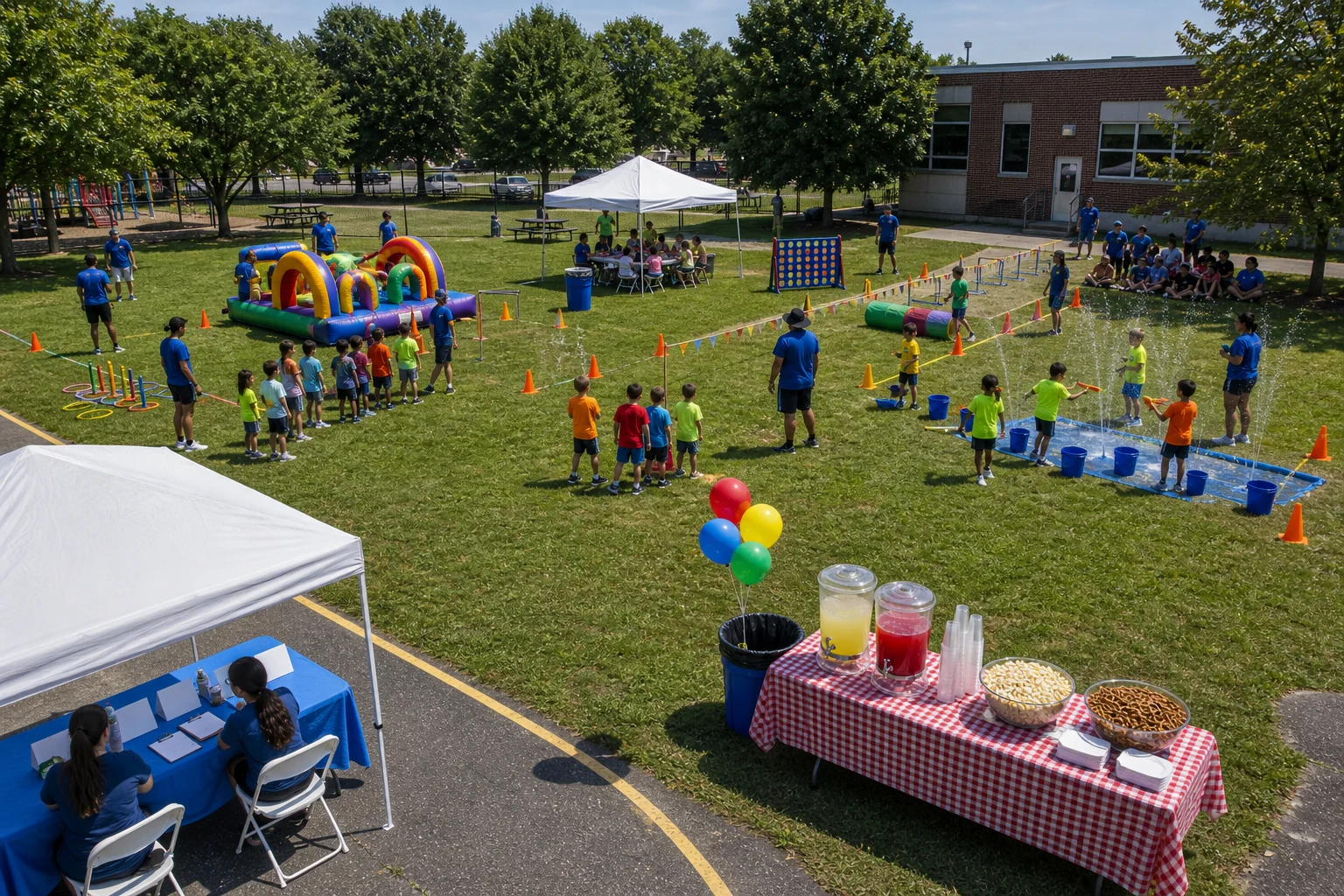
Wet and dry activities need different spaces. Water games should have room for splash, towels, drainage, and staff supervision. Dry games, obstacle stations, or inflatables should stay away from slick surfaces and crossing water paths.
Shade is not just a comfort detail. It helps campers reset between stations and gives counselors a place to regroup. A shaded rest area can reduce crowding around snack or supply tables because campers have a clear place to pause.
Use cones, tables, tents, or natural boundaries to show where each station begins and ends. Campers respond better when the event layout is visible.
Choose Attractions That Match Energy and Supervision
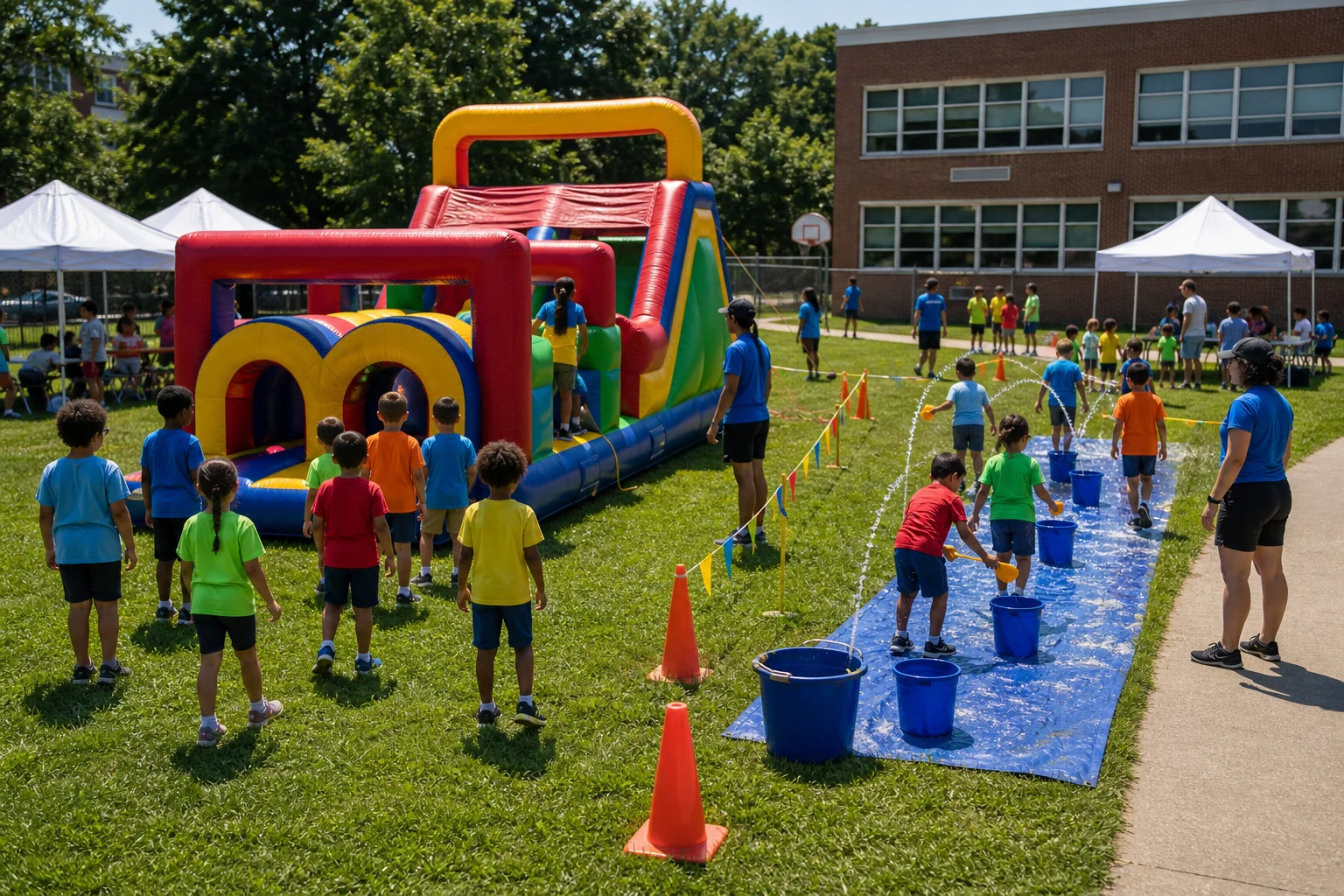
Obstacle-style activities can work well for camp field days because they create movement and quick turns. Water games can bring summer energy, but they need the right space, surface, and reset plan. Inflatable games may be strong anchors when access and supervision are clear.
The rental should fit the age group. Younger campers may need simpler games with more adult help. Older campers can handle more challenge, competition, and timed rotations. Mixed-age camps may need stations that can be adjusted by group.
Avoid packing the site with too many high-energy attractions. A balanced camp event gives campers active moments, calmer stations, snack breaks, and shade.
- Use obstacle activities for movement and quick turns.
- Use water games only where the surface and supervision work.
- Match each station to age range and counselor support.
- Keep calmer stations available for breaks and transitions.
Keep Station Supplies Ready
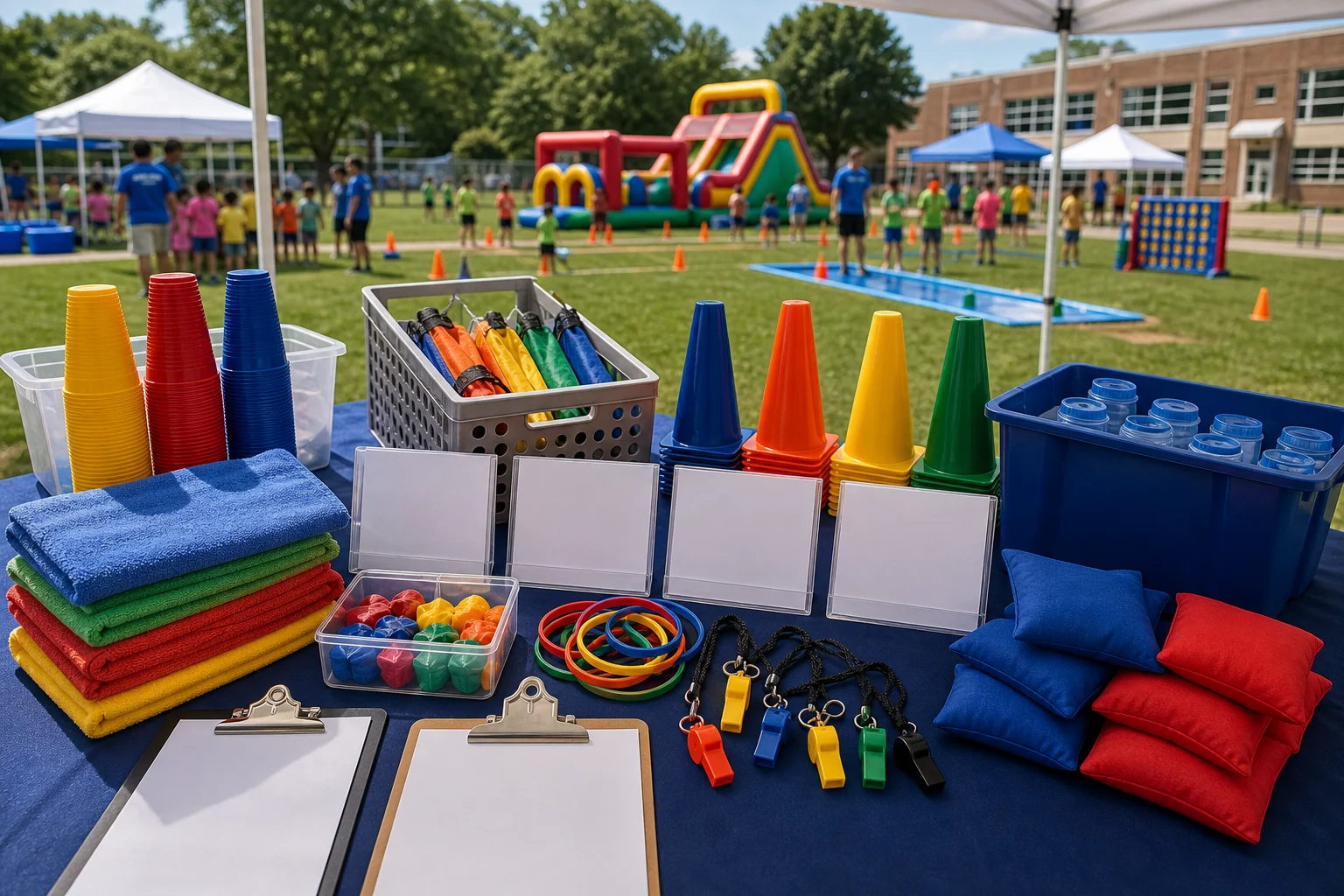
A camp event can stall when supplies wander. Cones, towels, wristbands, cups, beanbags, clipboards, and station cards need a clear home. If counselors have to hunt for missing pieces, the rotation schedule loses momentum.
Make supply tables functional rather than decorative. Put station materials in bins, keep extra water and towels where they will be used, and separate wet-zone materials from dry-zone materials. Blank rotation cards can help staff track flow without relying on long explanations.
A strong supply setup also makes teardown easier. When each station has a home base, cleanup can happen without mixing wet towels, game pieces, and snack materials.
Counselor staffing should be part of this plan. Assign one adult to the activity, one to the line or waiting area, and one to the transition point when the station is busy. Smaller camps may combine roles, but the responsibilities should still be clear before campers arrive.
If the camp serves a wide age range, build in adjustment points. The same station may need a shorter distance, slower pace, or simpler goal for younger campers and a more competitive format for older groups.
Quote Details for Summer Camp Rentals
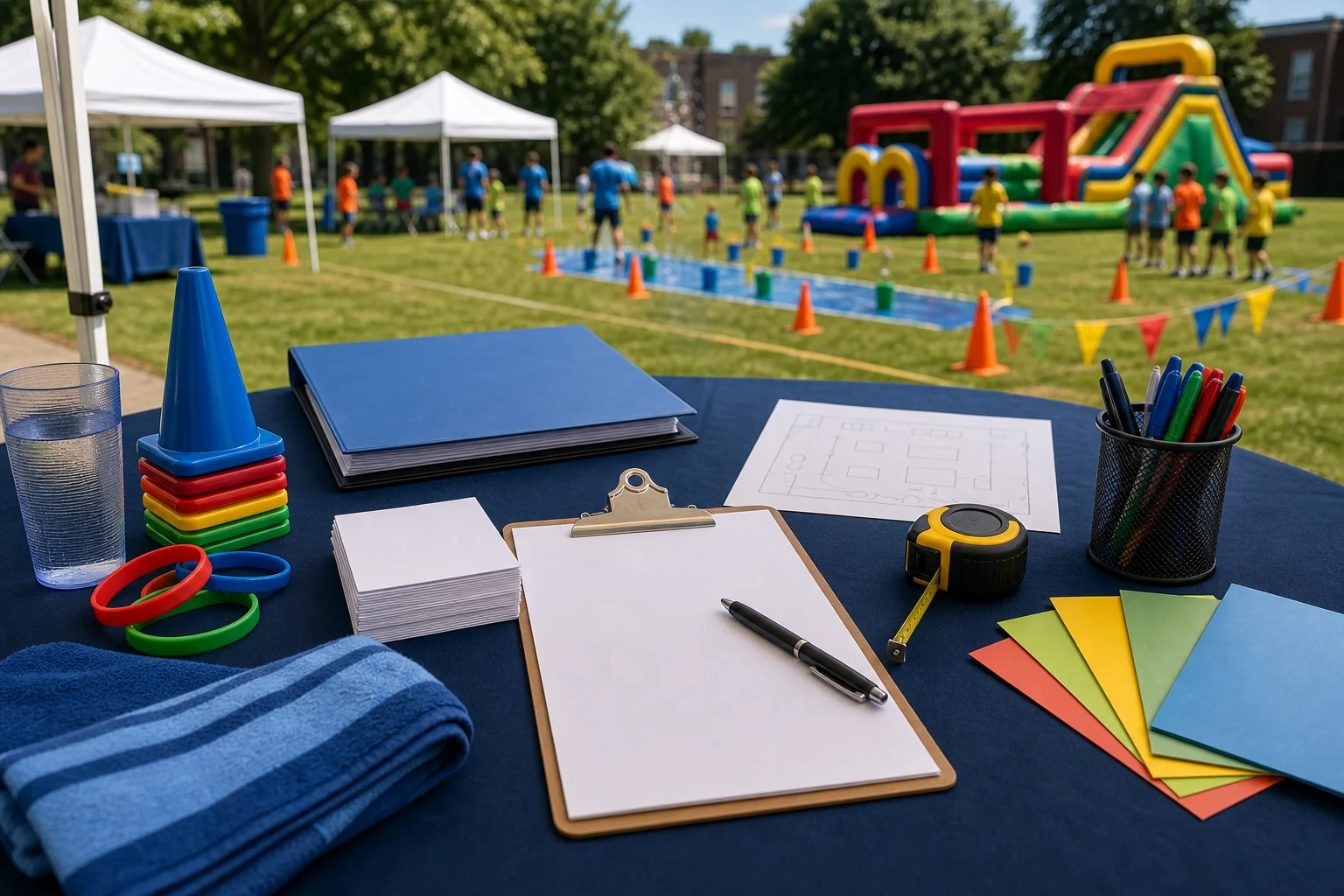
When requesting summer camp rentals in Philadelphia, include the date, location, camp type, camper count, age groups, group count, rotation schedule, event hours, surface, wet or dry activity preferences, water access, power, shade, access path, setup window, teardown window, and preferred catalog items.
Mention whether the event is a field day, end-of-camp celebration, water day, youth program event, school summer program, church camp, rec center camp, or private camp gathering. If the site has limited water access, uneven fields, shared playground space, or strict timing, include that context.
Good camp details help Party Pros East Coast recommend a rental mix that supports staff instead of complicating the day.
It also helps to share the camp schedule around lunch, pickup, and bus timing. A rental plan that fits the real day is easier to staff, reset, and wrap up before families arrive, especially when counselors have other program duties and group transitions as well.
- Date, camp location, event type, camper count, and event hours.
- Age groups, counselor groups, rotation timing, and station goals.
- Surface, shade, water access, power, loading path, and weather notes.
- Preferred rentals such as obstacle courses, inflatable games, water slides, dunk tanks, or field-day stations.
- Staffing, supervision, reset, and teardown considerations.
Frequently Asked Questions
What rentals work for summer camp events?
Obstacle courses, inflatable games, water slides, dunk tanks, field-day games, concessions, and shaded rest areas can work when the site, age range, and supervision plan fit.
How should wet and dry activities be arranged?
Wet zones should be separated from dry games, snack tables, and walking lanes so campers can rotate safely and staff can manage towels, water, and reset supplies.
What details help with a summer camp rental quote?
Include date, location, camper count, age groups, rotation schedule, surface, water access, power, setup timing, and preferred catalog items.