
Start With the Event Goal
School carnival planning gets easier when the committee agrees on the goal first. A spring fundraiser, a fall family night, a field-day add-on, and a reward event can all use similar rentals, but the best mix changes based on age range, schedule, and expected crowd size.
For a broad Philadelphia school audience, the safest starting point is a balanced plan: several quick booth games, one or two bigger visual draws, a prize area, and a concession station that gives families a natural break point.
- Use booth games for steady guest rotation.
- Use feature attractions for excitement and photos.
- Use concessions to slow the pace and keep families on site.
- Use a quote request to confirm setup space, staffing, and access details.
Build a Layout That Keeps Lines Moving
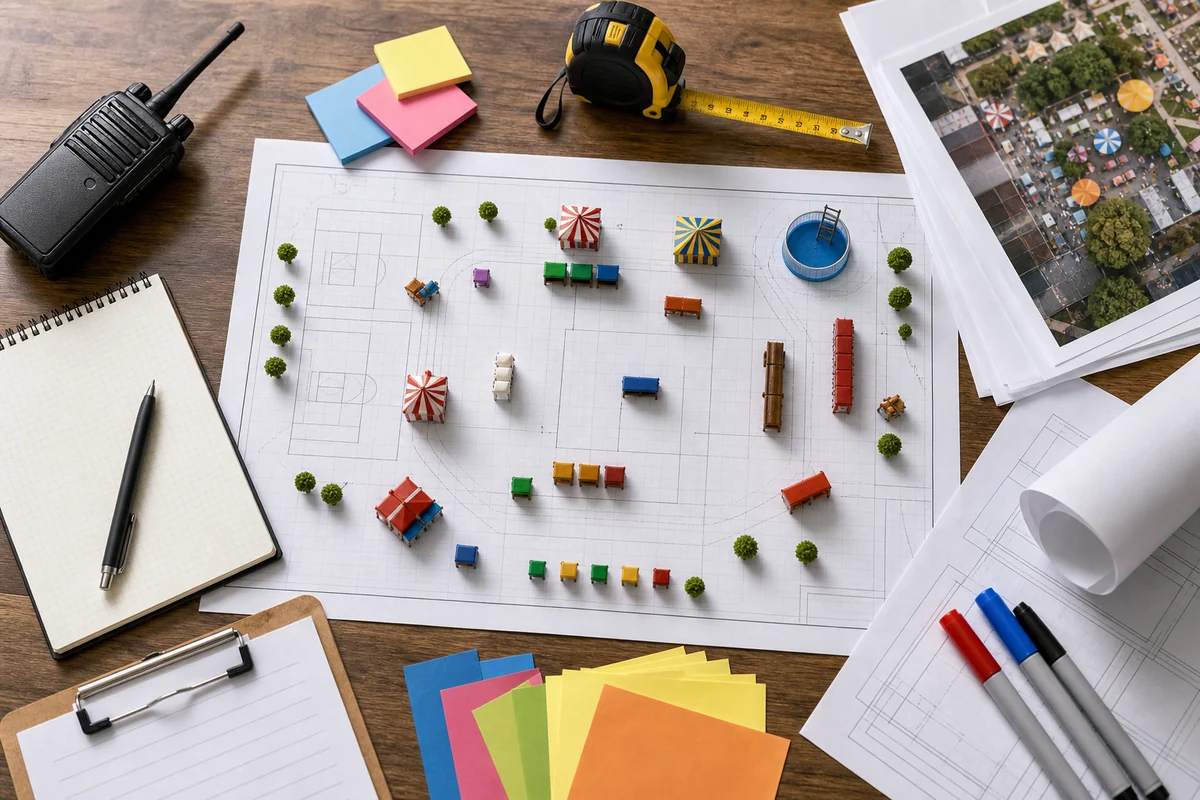
A school carnival can feel crowded even with the right number of games if the layout fights the guest flow. Keep entry, ticket or check-in, concessions, and prize pickup separated enough that one line does not block another.
For outdoor schoolyards, booth rows work well along a fence or perimeter. Larger attractions such as a dunk tank, high striker style game, or inflatable should have extra space for waiting guests and spectators.
Choose a Game Mix for Different Ages
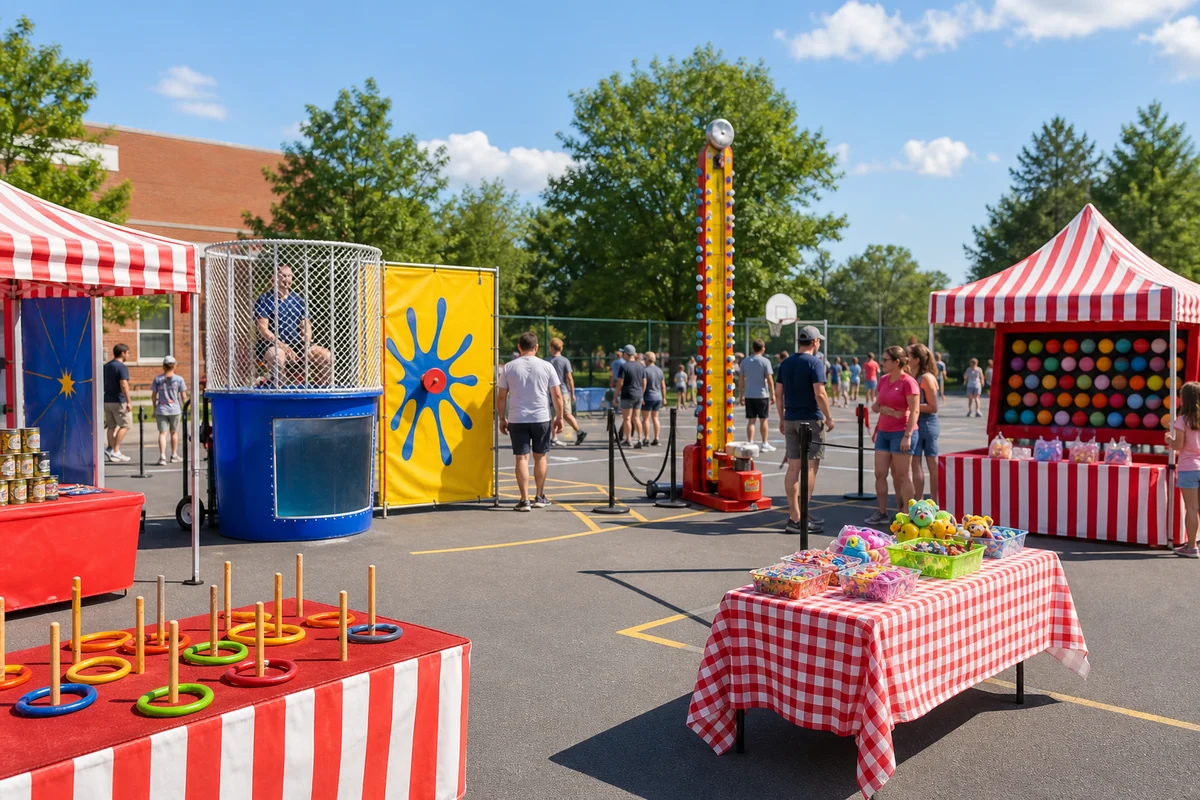
The strongest school carnival rental mix usually has easy wins for younger students, skill games for older students, and a few all-ages attractions that parents can enjoy too. Ring toss, can smash, fish pond, frog hop, high striker, dunk tank, and similar catalog-backed options can all support different age ranges.
Avoid building the whole event around one attraction. A better plan spreads the activity across multiple stations so students can rotate without long dead spots.
- Younger grades: simple toss games, fish pond style games, prize-friendly stations.
- Middle grades: skill games, high-energy challenges, and dunk tank spectatorship.
- Families: concessions, photo moments, and classic carnival games with easy rules.
Plan Prizes, Concessions, and Volunteer Stations Together
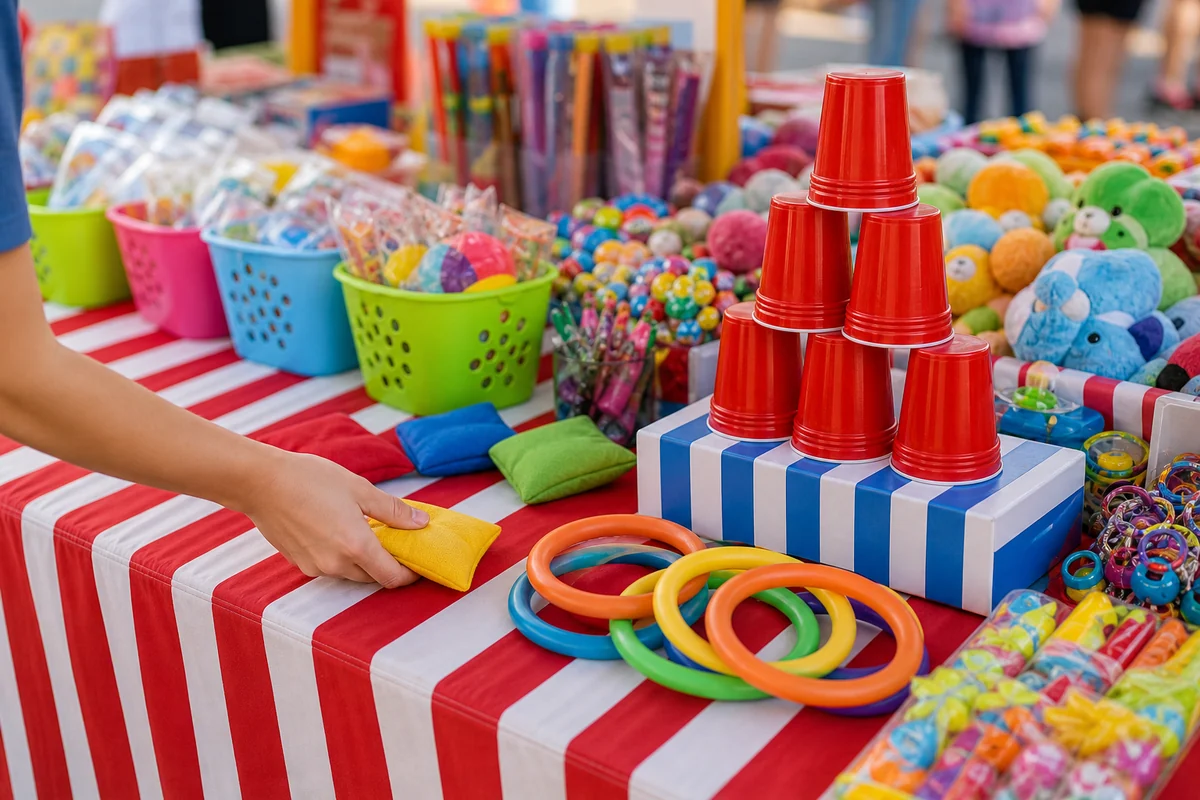
Prizes can make a carnival feel complete, but they need their own flow. If every booth gives out prizes directly, volunteers need storage space at each station. If there is one central prize table, the committee needs a clear path from games to redemption.
Concessions such as popcorn, cotton candy, snow cones, and similar stations work best when placed near seating or a low-traffic edge. That keeps snack lines from cutting through active game areas.
What to Include in the Quote Request
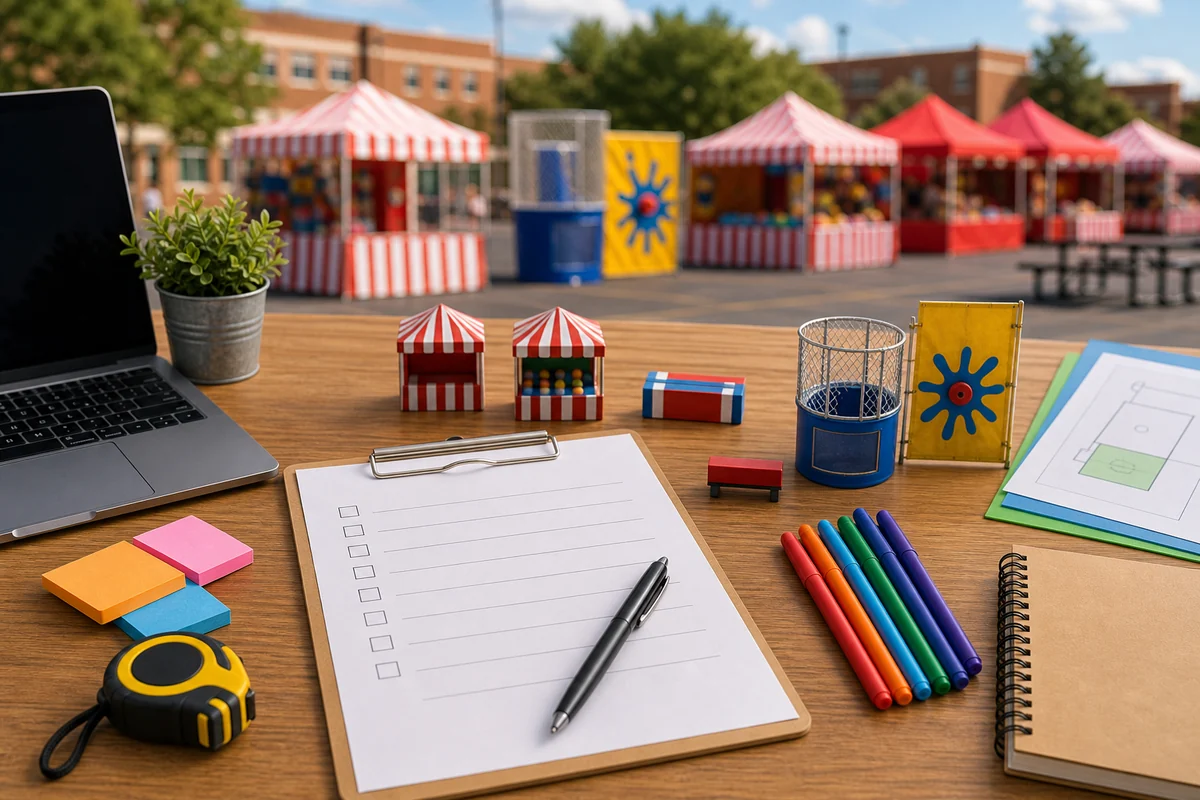
Party Pros East Coast does not need a perfect event diagram to start the conversation. The helpful details are the practical ones: date, school location, event hours, indoor or outdoor setting, expected attendance, parking or loading notes, power access, surface type, and any preferred catalog items.
If the committee already knows the event goal, guest age range, and must-have attractions, include those notes too. They help the rental plan stay focused and realistic.
- Event date, time, and Philadelphia-area location.
- Indoor or outdoor setup, surface type, and access path.
- Expected attendance and grade range.
- Preferred games, concessions, dunk tank, inflatables, or photo options.
- Any school rules, setup windows, or volunteer/staffing needs.
Frequently Asked Questions
How many games should a school carnival have?
It depends on attendance and event length, but a balanced school carnival usually works better with several quick-turn games than one or two large attractions alone.
Can carnival games be combined with concessions?
Yes. Carnival games and concession rentals often work together for school events, fundraisers, and family nights. Quote details confirm the final setup.
What should a Philadelphia school include when requesting a quote?
Include the date, location, guest count, age range, event hours, indoor or outdoor setup, surface, access notes, and preferred catalog items.